
Dubai’s rapidly expanding real estate market is entering a pivotal phase, with more than 90,000 residential units expected to be delivered by the end of this year. As investors, developers, and end-users question whether this signals a golden investment window or a looming oversupply, the broader delivery pipeline from 2025 to 2032 offers crucial insights. Understanding this long-term trajectory is essential for interpreting market direction, pricing stability, and investment strategy in one of the world’s fastest-growing property hubs.
The Scale of Dubai’s Upcoming Supply: What 90,000 Units Really Means
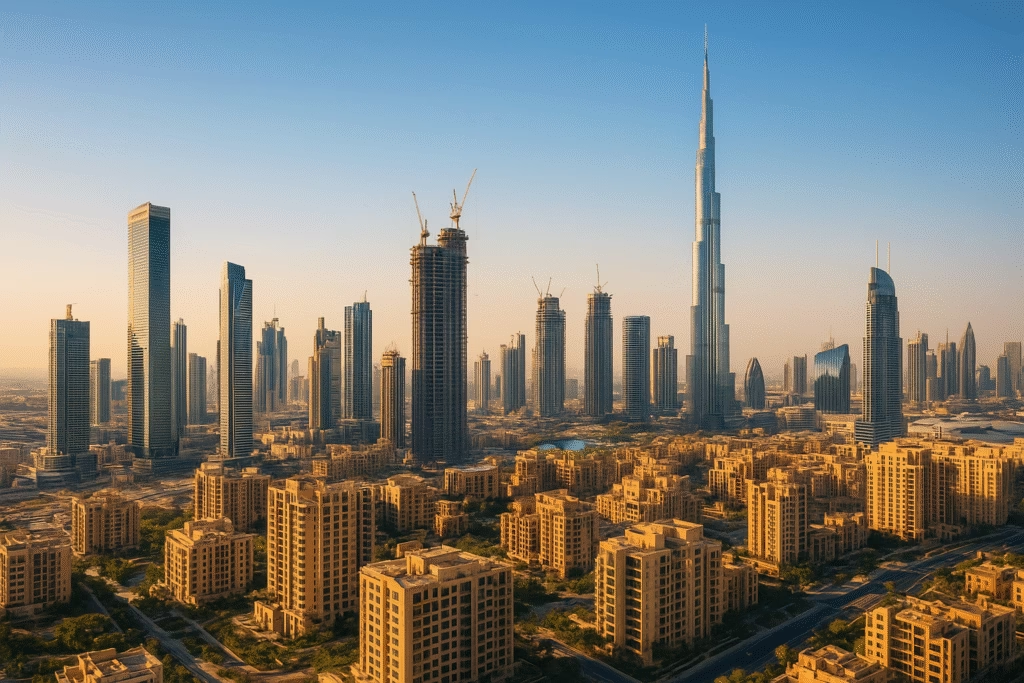
Dubai’s real estate sector has seen consistent growth, fueled by population influx, global investor activity, rising tourism, and the emirate’s long-term development vision. The scheduled 90,000-unit completion milestone is part of an extended pipeline reflecting developer confidence, strong demand, and city-wide expansion.
However, it raises a critical question: Does this surge point to growing opportunity—or future oversupply?
To answer this, one must assess not only the volume but also distribution, typology, pricing segments, geographic clusters, and absorption capacity of the Dubai property market.
Dubai’s 2025–2032 Delivery Pipeline: A Long-Term View
More important than year-end numbers are the planned deliveries over the next eight years. Dubai’s pipeline is not static; it adapts to demand, developer strategy, economic policies, and global trends. The emirate is expected to deliver between 300,000 to 350,000 new residential units from 2025 to 2032, depending on market conditions.
Key Pipeline Characteristics
- Master communities dominate deliveries, with major contributions from Dubai South, Dubailand, Dubai Creek Harbour, and Business Bay expansions.
- Developers are shifting toward mid-income and affordable luxury, bridging market gaps and expanding accessibility.
- City planning supports population projections, estimated to reach 6–7 million residents by 2032, ensuring long-term demand remains strong.
- Mixed-use communities are becoming central to new supply, aligning with Dubai’s 2040 Urban Master Plan.
This broader view clarifies that the short-term 90,000-unit boost is part of a structurally balanced urban growth strategy, not an isolated surge.
Is Dubai Heading Toward Oversupply? The Data Says Otherwise
The argument for oversupply often stems from surface-level comparisons between annual deliveries and current demand. Yet Dubai’s market dynamics differ significantly from traditional property environments.
1. Population Growth Outpacing Supply
Dubai’s population has been growing at over 100,000 new residents per year, driven by
- foreign workforce expansion
- lifestyle migration
- business relocation
- long-term visas and golden visa reforms
If this trend continues—supported by business-friendly policies and sustained economic diversification—demand will continue absorbing new units effectively.
2. Investor Appetite Remains Aggressive
International investors from Europe, Asia, Russia, Africa, and the GCC continue to dominate transactions. Dubai’s
- tax-free structure
- stable governance
- strong rental yields (6%–10%)
- high transparency ranking
make it a magnet for global capital.
This consistent foreign inflow reduces oversupply risk even in high-delivery years.
3. Shift Toward End-User Demand
Earlier cycles were investor-heavy. Today, there is a noticeable increase in end-user purchases, especially among
- professionals relocating
- families seeking long-term housing
- remote workers benefiting from flexible residency programs
End-user-driven markets experience greater stability, even during high-supply phases.
4. Supply Is Not Evenly Distributed
Oversupply concerns usually generalize all communities, but Dubai’s market is highly segmented.
- Prime areas (Downtown Dubai, Palm Jumeirah, Dubai Marina) maintain limited supply and high demand.
- Affordable clusters absorb populations rapidly due to pricing accessibility.
- Luxury and branded residences maintain strong global demand, often selling out before completion.
Thus, oversupply risks may exist in very specific micro-markets, but not at a city-wide level.
Why the 90,000 Units Signal Opportunity, Not Saturation
Investors are increasingly viewing the surge in deliveries as a strategic timing advantage, not a warning sign.
1. More Launches = More Competitive Pricing
With strong project competition, developers offer:
- attractive payment plans
- post-handover payment structures
- service charge incentives
- early-bird launch pricing
This creates a buyer’s advantage, especially in off-plan segments.
2. Diverse Inventory Meets Varied Investor Profiles
From studios to ultra-luxury villas, Dubai offers multi-tiered investment categories. The expanded supply allows investors to:
- diversify portfolios
- access new sub-communities
- secure better entry points
- invest across affordable, mid-tier, and premium segments
3. Rental Demand Continues to Outperform Supply
Even with new supply, renting remains highly competitive. Many residents prefer renting due to:
- job-linked mobility
- flexible lifestyle
- short-term stay preferences
Occupancy rates in prime areas often exceed 90%, and new properties achieve rapid tenant absorption.
4. Strong Tourism Sector Fuels Short-Stay Market
Dubai’s tourism is on track to exceed 25 million visitors annually, reinforcing the market for:
- holiday homes
- serviced apartments
- short-term rentals
This diversification of tenant profiles creates multiple demand channels, supporting long-term stability.
2025–2032 Forecast: What Investors Should Expect
Dubai’s next decade is shaped by ambitious megaprojects, infrastructure expansion, and strategic city planning. Key trends to expect include:
1. Rising Property Values in Master Communities
Dubai South, Meydan, Dubailand, and Dubai Creek Harbour will benefit significantly from:
- new commercial clusters
- improved transport links
- integrated community designs
2. Continued International Migration
Dubai’s appeal as a global residency hub ensures steady demand for:
- mid-income housing
- waterfront homes
- suburban villas
- sustainable communities
3. Increased Developer Partnerships and Branded Residences
Luxury branded developments with names like Four Seasons, Marriott, and Bulgari will continue attracting high-net-worth buyers globally.
4. Strong Rental Market Stability
Expat-driven cycles and job growth across finance, technology, healthcare, and hospitality will support consistent rental demand.
Conclusion: Balanced Growth, Expanding Opportunity, and Sustainable Demand
While the year-end delivery of 90,000 units may appear high at first glance, deeper analysis affirms that Dubai’s real estate ecosystem is structured to absorb ongoing supply. With rising population numbers, global investor demand, diversified developments, and long-term economic planning, Dubai is positioned for sustained, healthy growth through 2032.
For strategic investors, the current and upcoming supply waves represent expansive opportunity, not oversupply—especially for those making well-informed, community-focused decisions.