
The Dubai real estate market in 2025 is standing at a fascinating crossroads — a moment where analysts, investors, and homebuyers are all asking the same question: Is the real estate boom stabilizing, or are we only witnessing the beginning of a new growth era?
With record-breaking transactions, global investor confidence, and a diversified economic landscape, Dubai continues to cement its position as one of the world’s most lucrative property markets. This article explores the current trends, investment outlook, property price movements, and the forces shaping Dubai’s real estate future in 2025 and beyond.
Overview of the Dubai Real Estate Market in 2025
The year 2025 marks a defining phase for Dubai’s property sector. After several years of consistent growth following the pandemic recovery, the market has demonstrated remarkable resilience and sustainable expansion.
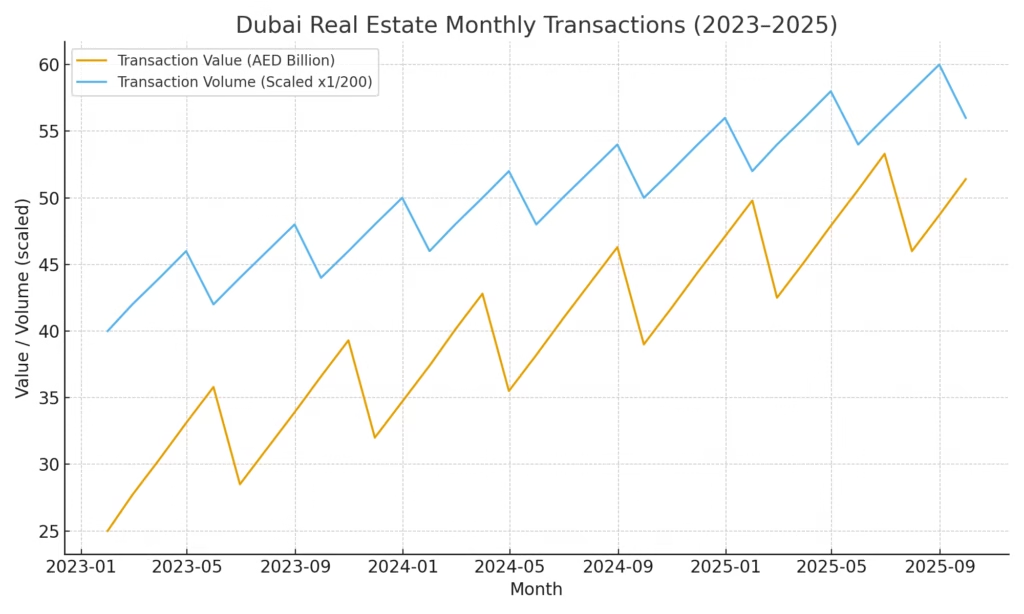
According to data from the Dubai Land Department (DLD), the emirate recorded over AED 400 billion in real estate transactions in 2024, and early 2025 figures suggest this trajectory is continuing. Property prices have stabilized in some segments but continue to rise in prime locations such as Palm Jumeirah, Downtown Dubai, Business Bay, and Dubai Hills Estate.
The government’s proactive policies, long-term residency visas, and continued infrastructure development are fueling both domestic and international demand.
Key Drivers of Dubai’s Real Estate Boom
1. Government Policies and Investor-Friendly Reforms
Dubai’s government has introduced visionary reforms aimed at sustaining long-term growth. The Golden Visa program, retirement residency, and freehold ownership for foreigners have opened new avenues for international investors.
Additionally, 100% business ownership laws, tax-free income, and a streamlined property registration process have strengthened Dubai’s reputation as a safe and transparent real estate hub.
2. Global Investor Influx
Investors from Europe, Asia, and the Middle East are increasingly turning to Dubai for its high rental yields and stable economy. Buyers from India, Russia, China, and the UK dominate the market, attracted by the city’s luxury lifestyle, safety, and strong ROI.
The dirham’s peg to the US dollar and the absence of property taxes further enhance Dubai’s appeal, providing a hedge against global inflation and currency volatility.
3. Diversified Property Segments
Unlike the speculative markets of the past, 2025’s Dubai real estate growth is spread across multiple segments — luxury villas, waterfront apartments, affordable housing, and off-plan developments. Developers are now focusing on sustainability, community living, and smart home technologies to attract a broader buyer base.
Is the Market Maturing or Entering a New Growth Phase?
Signs of Market Maturity
Dubai’s real estate market has evolved from short-term speculation into a sophisticated investment ecosystem. Regulations by RERA (Real Estate Regulatory Agency) have created transparency and investor protection, minimizing risks of oversupply or sudden downturns.
Price corrections in certain areas show signs of healthy stabilization, indicating the market is maturing rather than overheating. Developers are focusing on quality over quantity, ensuring that new launches meet genuine end-user demand.
Indicators of Continued Growth
Despite signs of maturity, several factors suggest that the boom is far from over. Massive projects like Dubai Creek Harbour, Emaar Beachfront, and Expo City Dubai are reshaping the skyline and driving sustained interest.
Additionally, the Dubai Economic Agenda D33, which aims to double the city’s GDP within a decade, will likely stimulate demand for both commercial and residential real estate.
The influx of global businesses, digital nomads, and high-net-worth individuals is expected to keep rental yields strong and capital appreciation steady in 2025 and beyond.
Top Performing Areas in Dubai Real Estate 2025
1. Palm Jumeirah
A symbol of ultra-luxury, Palm Jumeirah remains a magnet for elite investors. With limited supply and soaring international interest, villas and penthouses here continue to fetch record-breaking prices.
2. Downtown Dubai
Home to the Burj Khalifa and Dubai Mall, this area remains a prime destination for investors seeking short-term rental income and long-term value growth.
3. Dubai Hills Estate
Known for its family-oriented lifestyle, Dubai Hills Estate offers a blend of modern villas, townhouses, and apartments surrounded by golf courses and parks, appealing to both residents and end-users.
4. Jumeirah Village Circle (JVC)
Offering affordable yet quality housing, JVC continues to attract middle-income buyers and investors seeking high rental yields in 2025.
Emerging Trends in Dubai Real Estate
1. Sustainable and Smart Developments
Dubai’s focus on green buildings, solar-powered communities, and energy-efficient designs aligns with its Net Zero Carbon 2050 strategy. Developers like Emaar, DAMAC, and Sobha Realty are integrating smart technology and eco-friendly materials in new projects.
2. Rise of Off-Plan Investments
Off-plan sales continue to dominate 2025, accounting for more than 60% of total transactions. With flexible payment plans and strong developer credibility, investors are leveraging this segment for early entry gains.
3. Increased Demand for Branded Residences
Luxury branded properties, such as The Lana Residences Dorchester Collection and Bulgari Lighthouse, are setting new standards in design and exclusivity, appealing to ultra-high-net-worth investors.
Forecast: What Lies Ahead for Dubai’s Real Estate in 2026 and Beyond
Looking beyond 2025, analysts predict steady, sustainable growth across Dubai’s property sector. While some price stabilization is expected, long-term fundamentals remain strong.
The Expo City legacy projects, the Dubai 2040 Urban Master Plan, and the ongoing AI-driven smart city initiatives will further strengthen real estate values.
Experts suggest that by 2026, Dubai could enter a phase of moderate appreciation, focusing more on affordable housing, community living, and sustainability — ensuring long-term market health and global competitiveness.
Conclusion: Dubai’s Real Estate Future is Bright and Balanced
The Dubai real estate market in 2025 reflects a unique balance of maturity and momentum. The city has transitioned from rapid speculative cycles to sustainable, investor-driven growth.
With robust economic fundamentals, global investor confidence, and visionary government initiatives, Dubai’s property boom is not ending — it’s evolving.
Whether you’re an investor seeking long-term gains, a developer planning the next iconic project, or a homebuyer looking for stability, Dubai remains a world-class destination offering unparalleled real estate opportunities in 2025 and beyond.