
Dubai’s real estate sector has long been a symbol of rapid growth, iconic architectural marvels, and international investment opportunities. Following years of explosive expansion and record-breaking developments, the market now faces a new reality: stability after the surge. Investors, developers, and policymakers are questioning whether Dubai’s property sector is finally transitioning into its mature phase—a period marked by measured growth, sustainability, and long-term value creation.
Dubai’s Real Estate Growth Journey
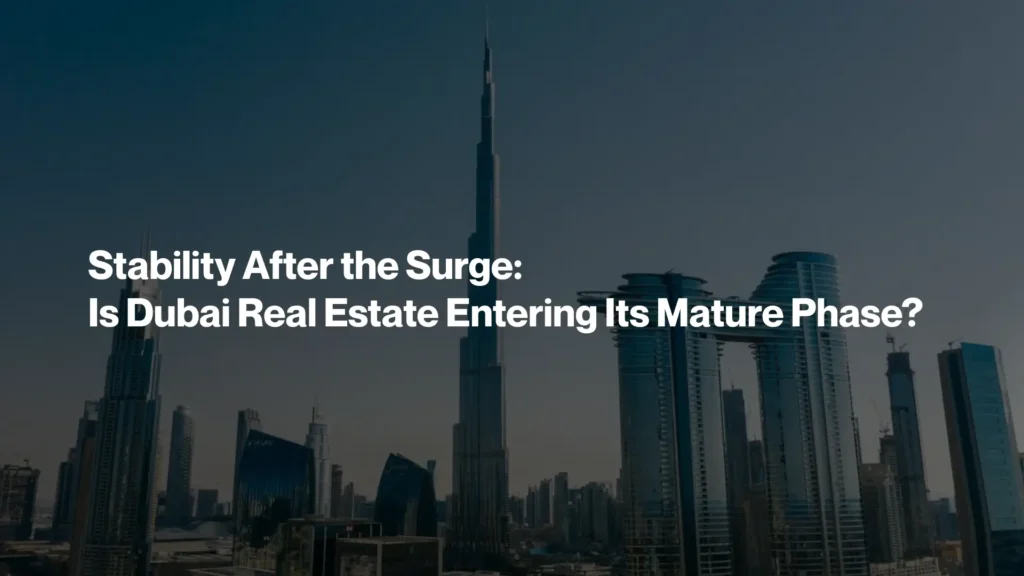
From Desert to Global Hub
In less than three decades, Dubai transformed from a desert economy into one of the world’s leading real estate markets. With landmark projects like Palm Jumeirah, Burj Khalifa, and Downtown Dubai, the city established itself as a magnet for investors seeking luxury, innovation, and profitability.
The Surge Years
The early 2000s saw a massive influx of foreign investors as Dubai introduced freehold property ownership for expatriates. Coupled with tax-free advantages and strategic global positioning, the market experienced double-digit growth. However, this surge also came with volatility, evident during the 2008 global financial crisis, when prices dropped significantly.
The Post-Pandemic Resurgence
The COVID-19 pandemic initially slowed down demand, but Dubai’s swift recovery strategies—including long-term visas, Expo 2020, and business-friendly reforms—sparked renewed interest. By 2021–2023, property sales volumes reached unprecedented highs, driven by wealthy investors from Europe, Asia, and the Middle East.
Signs of Market Stabilization
Price Growth Moderation
After the steep climb in 2021–2023, analysts now observe price stabilization across prime areas such as Downtown, Palm Jumeirah, and Dubai Marina. While demand remains strong, the growth rate has slowed, suggesting a shift from speculation-driven surges to sustainable demand cycles.
Diverse Investor Base
Unlike earlier phases dominated by speculative short-term investors, today’s buyers include long-term residents, end-users, and institutional investors. This shift indicates a healthier market foundation and reduced exposure to sharp downturns.
Balanced Supply and Demand
Dubai’s real estate has historically faced challenges of oversupply, leading to fluctuating rental yields and property values. However, recent government regulations and developer strategies are focusing on measured project launches to align supply with genuine demand.
Key Factors Driving the Mature Phase
Government Reforms and Regulations
Dubai’s regulatory framework has evolved significantly, fostering transparency, investor protection, and accountability. Initiatives such as:
- Dubai Land Department’s digital services
- RERA’s strict compliance monitoring
- Golden Visa programs
These measures are strengthening investor confidence and contributing to long-term stability.
Shift Toward Sustainability and Smart Cities
Global investors are increasingly prioritizing green buildings, energy efficiency, and smart infrastructure. Dubai has responded with initiatives like the Dubai 2040 Urban Master Plan, which emphasizes sustainability, livability, and integrated urban design.
Rise of Affordable Housing Segments
While luxury properties dominate headlines, Dubai’s real estate is also expanding into mid-market and affordable housing. This diversification reduces dependency on high-net-worth individuals and creates opportunities for expatriates and middle-income residents.
Growing Institutional Investments
The involvement of real estate funds, REITs, and international developers is another indicator of maturity. Institutional investors typically favor stable, regulated, and predictable markets—signaling Dubai’s readiness for the next stage.
Opportunities in a Stabilized Market
Steady Rental Yields
Dubai consistently offers rental yields between 5–8%, higher than many global real estate hubs. Stability in demand ensures that rental properties continue to provide strong returns for investors.
Long-Term Capital Appreciation
While explosive growth may slow, Dubai properties are expected to see consistent appreciation aligned with GDP growth, population increases, and infrastructure development.
Diversification of Property Types
From luxury waterfront villas to affordable apartments and commercial office spaces, Dubai offers diversified opportunities that appeal to a broad spectrum of investors.
Integration of Technology in Real Estate
The adoption of blockchain transactions, virtual property tours, and AI-driven property management strengthens Dubai’s position as a future-ready market.
Challenges on the Path to Maturity
Global Economic Uncertainty
While Dubai is resilient, it remains interconnected with global economic cycles. Oil price volatility, inflationary pressures, and geopolitical risks may influence investor sentiment.
Balancing Supply Growth
Though progress has been made, avoiding oversupply remains critical. Developers must ensure new launches match genuine market needs.
Affordability for Residents
As Dubai grows, ensuring affordability for its workforce is essential. If prices outpace income levels, it could create gaps in long-term demand.
Future Outlook for Dubai Real Estate
Sustained Foreign Demand
Dubai’s appeal as a safe investment destination continues to attract global investors. Long-term visas, favorable taxation, and strong legal frameworks make it a competitive choice.
Focus on Livability and Community Development
The shift from iconic skyscrapers to community-oriented developments—with schools, healthcare, green spaces, and connectivity—reflects the city’s vision of long-term urban sustainability.
Integration with Global Investment Trends
Dubai is aligning itself with global real estate trends, including proptech, sustainability, and wellness-focused developments, ensuring its competitiveness among top-tier investment destinations.
Conclusion: Dubai’s Transition to a Mature Market
Dubai’s real estate journey—from rapid expansion to stabilization—highlights a market entering its mature phase. While the era of speculative surges may be behind, the future promises sustainable growth, transparency, and long-term value. For investors, this evolution means lower risks, steady returns, and diverse opportunities across residential, commercial, and mixed-use developments.
The city’s resilience, global positioning, and visionary planning indicate that Dubai real estate is not slowing down—it is simply maturing into a globally respected, sustainable, and future-ready market.